In the industrial sector, crushers play a pivotal role in various processes, from mining to recycling. Among them, primary and secondary industrial crushers are two fundamental types, each with distinct characteristics and applications. As an industrial crushers supplier, I am well - versed in the differences between these two types of crushers, and I'm eager to share this knowledge with you.
1. Definition and Basic Function
Primary crushers are the first stage of the crushing process. They are designed to handle large - sized raw materials directly from the source, such as quarries or mines. Their main function is to reduce the size of the incoming material to a manageable level for further processing. For example, in a mining operation, primary crushers break down large boulders into smaller pieces that can be transported more easily and processed in subsequent stages.
Secondary crushers, on the other hand, come into play after the primary crushing. They take the output from the primary crushers and further reduce the particle size to meet the specific requirements of the final product. This may involve creating a more uniform particle size or achieving a finer grind.
2. Crushing Mechanisms
Primary Crushers
- Jaw Crushers: One of the most common types of primary crushers, jaw crushers use a compressive force to break the material. They have two jaws, one fixed and one movable. As the movable jaw moves back and forth, it compresses the material against the fixed jaw, causing it to break. Jaw crushers are suitable for hard and abrasive materials, and they can handle large feed sizes.
- Gyratory Crushers: These crushers operate by a gyratory motion. A conical mantle gyrates within a concave bowl, crushing the material between the mantle and the concave. Gyratory crushers are often used in large - scale mining operations due to their high capacity and ability to handle very large feed sizes.
Secondary Crushers
- Cone Crushers: Cone crushers use a compression and squeezing action to break the material. The mantle rotates eccentrically within the concave, and as the material passes through the crushing chamber, it is crushed. Cone crushers are known for producing a more cubical - shaped product, which is desirable in many applications such as road construction.
- Impact Crushers: Impact crushers use the principle of impact to break the material. The material is fed into the crusher and is struck by a high - speed rotor or hammers. This impact causes the material to break into smaller pieces. Impact crushers are effective for producing a fine - grained product and are often used in the recycling industry.
3. Feed Size and Output Size
Feed Size
Primary crushers are designed to accept large feed sizes. For example, a jaw crusher can handle feed sizes up to several feet in diameter. This is because they are the first step in the crushing process and need to be able to break down the large - scale raw materials.
Secondary crushers, however, are designed to accept the output from the primary crushers. Their feed size is generally smaller, typically in the range of a few inches to a foot or so, depending on the type of secondary crusher.
Output Size
The output size of primary crushers is relatively large compared to secondary crushers. The goal of primary crushing is to reduce the large - sized material to a size that can be further processed. The output of primary crushers may range from a few inches to several centimeters.
Secondary crushers are used to achieve a finer output size. The output of secondary crushers can be as small as a few millimeters, depending on the specific requirements of the application. For example, in the production of sand for construction, secondary crushers are used to produce a fine - grained product.
4. Capacity and Throughput
Capacity
Primary crushers generally have a higher capacity than secondary crushers. This is because they need to handle large volumes of raw material at the initial stage of the crushing process. For example, a large - scale jaw crusher can process hundreds of tons of material per hour.
Secondary crushers have a relatively lower capacity compared to primary crushers. Their main function is to refine the output of the primary crushers, so they do not need to handle as large a volume of material. However, they still need to be able to process the material at a sufficient rate to keep up with the overall production process.
Throughput
The throughput of a crusher refers to the amount of material that can pass through the crusher in a given time. Primary crushers typically have a higher throughput because they are designed to handle large - sized and high - volume materials. Secondary crushers have a lower throughput, but they are more focused on achieving a specific particle size and quality.
5. Applications
Primary Crushers
- Mining: In the mining industry, primary crushers are used to break down large ore deposits. For example, in a gold mine, primary crushers are used to crush the large - sized ore rocks into smaller pieces for further processing, such as grinding and extraction.
- Quarrying: In quarrying operations, primary crushers are used to break down large stones from the quarry. These stones can then be used for construction purposes, such as making concrete or asphalt.
Secondary Crushers
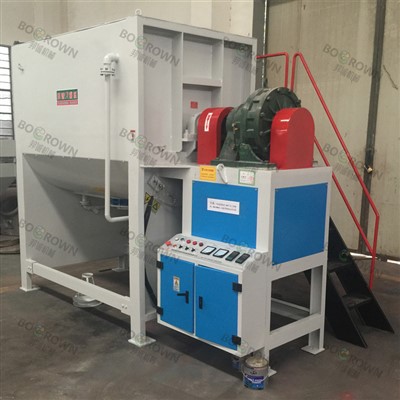
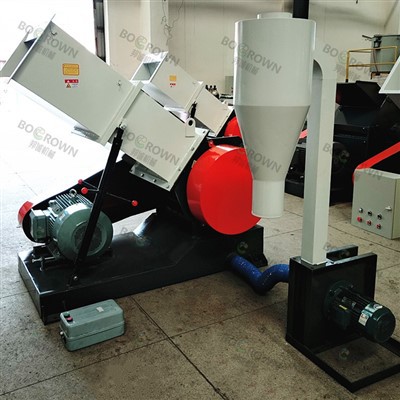
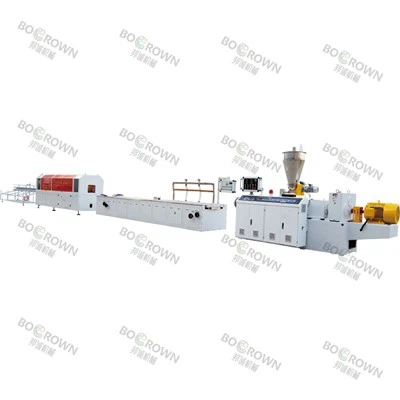
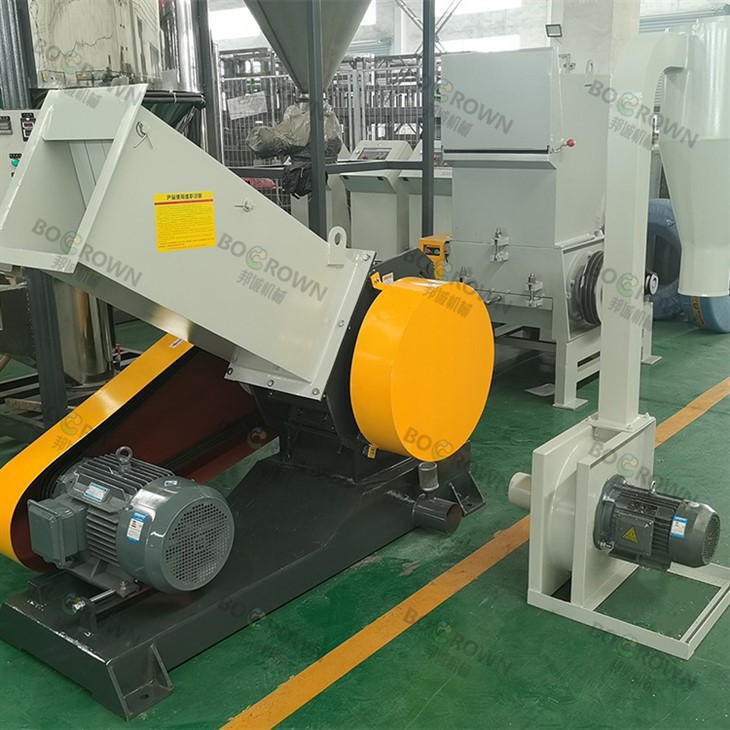
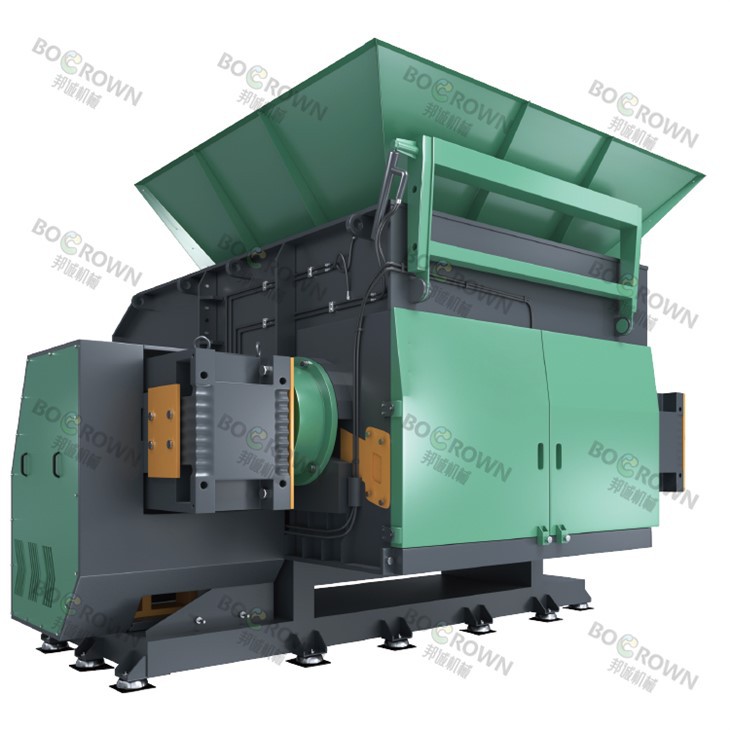
- Recycling: Secondary crushers are widely used in the recycling industry. For example, Recycling Plastic Crusher Machine is a type of secondary crusher that is used to break down plastic waste into smaller pieces for recycling. The Central Plastic Granulator Crusher and Horizontal Drying Plastic Crusher are also important secondary crushers in the plastic recycling process.
- Construction: In the construction industry, secondary crushers are used to produce fine - grained aggregates for concrete and asphalt production. They can also be used to crush demolition waste for reuse in construction projects.
6. Cost Considerations
Initial Cost
Primary crushers are generally more expensive than secondary crushers. This is because they are larger in size and have a higher capacity. The initial investment in a primary crusher can be significant, especially for large - scale industrial operations.
Secondary crushers are relatively less expensive. However, the cost can still vary depending on the type and size of the crusher. For example, a high - end cone crusher may be more expensive than a basic impact crusher.
Operating Cost
The operating cost of primary crushers is also relatively high. They consume more energy due to their large size and high - capacity operation. Maintenance costs can also be significant, as they are subject to more wear and tear due to the large - sized materials they handle.
Secondary crushers have a lower operating cost. They consume less energy and require less maintenance compared to primary crushers. However, the cost of spare parts and maintenance can still add up over time.
7. Contact for Purchase and Consultation
If you are in the market for industrial crushers, whether primary or secondary, we are here to assist you. Our team of experts can provide you with detailed information about our products, including their specifications, performance, and pricing. We understand that each customer has unique requirements, and we are committed to finding the best solution for your specific needs. Contact us today to start a discussion about your crusher requirements and let us help you make the right choice.
References
- "Crushing Equipment Handbook" - A comprehensive guide to industrial crushers and their applications.
- Industry reports on mining and recycling, which provide insights into the use of primary and secondary crushers in different sectors.