

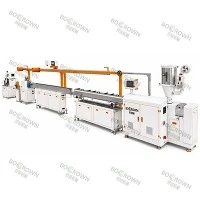


Feeding System
Product Overview
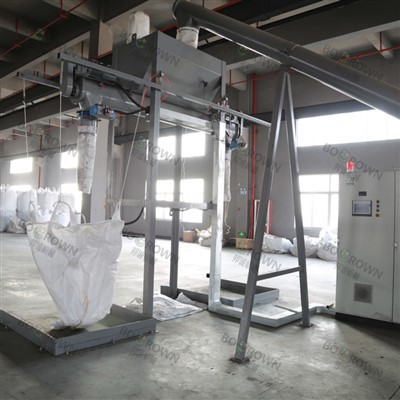
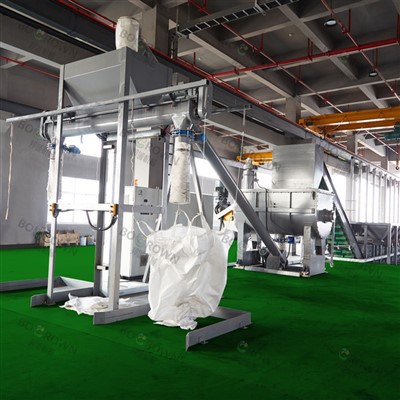
The Industrial Feeding System manages raw material storage, precise metering, and automated conveyance for polymer processing lines. Designed for direct integration with single-screw extruders, parallel twin-screw compounding lines, and sheet extrusion machinery, this system resolves material bridging, inconsistent feeding rates, and volumetric drift.
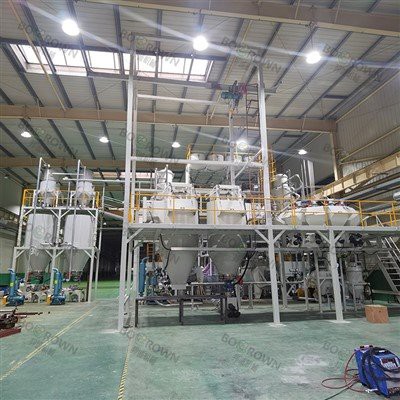
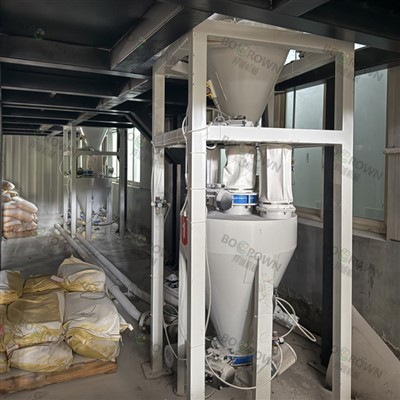
The system configuration handles diverse input states including virgin polymer pellets, recycled regrind, micronized powders, calcium carbonate fillers, and additives. Standard setups integrate closed-loop vacuum conveyance, gravimetric or volumetric metering units, and centralized PLC control panels to maintain continuous mass flow into the extruder throat or side feeder.






Key Features & Benefits
Closed-Loop Vacuum Conveyance:
Eliminates ambient moisture absorption in hygroscopic polymers (e.g., PET, PA) and prevents particulate contamination via sealed stainless steel piping circuits.
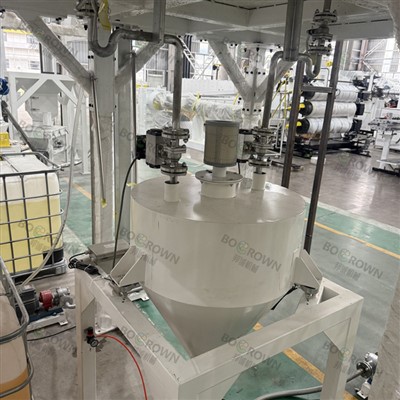
Anti-Bridging Agitation Architecture:
Features independent variable-speed agitators and vertical internal stirring paddles that break up cohesive powders and sticky additives, ensuring uniform flow into the screw flight without compaction.
High-Precision Metering Performance:
Utilizes close-tolerance twin screws or specialized progressive cavity screws machined on CNC lathes, delivering steady feeding repeatability within ±0.5% - 1% variance.
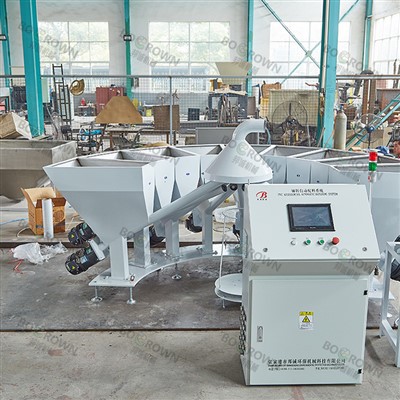
Multi-Component Integration:
Accommodates primary bulk storage silos, minor ingredient micro-dosing stations, and side-feeders into a unified HMI control interface.
Technical Specifications
|
Technical Parameter |
Single Screw Feeding Unit |
Twin Screw Feeding Unit |
Centralized Vacuum Loading System |
|
Throughput Capacity |
50 - 1,200 kg/h |
5 - 500 kg/h (Precision Metering) |
300 - 3,000 kg/h |
|
Feeding Accuracy |
±1.0% (Volumetric) / ±0.3% (Gravimetric) |
±0.5% (Volumetric) / ±0.1% (Gravimetric) |
N/A (Conveyance Focus) |
|
Compatible Material Form |
Free-flowing granules, regrind, uniform pellets |
Fine powders, sticky additives, fibers, masterbatch |
Pellets, granules, free-flowing powders |
|
Contact Material |
SUS304 / SUS316L Stainless Steel |
SUS316L with Hardened/Nitrided Screws |
SUS304 Pipeline & Cyclone Separator |
|
Drive Motor Type |
AC Induction with Inverter / Stepper |
Brushless Servo Motor with Planetary Gearbox |
High-Pressure Regenerative Blower / Carbon Brush Motor |
|
Control Interface |
Siemens S7-1200 / Schneider PLC + Touch HMI |
Siemens S7-1500 / Allen-Bradley PLC |
Centralized Relay or PLC Panel |
|
Power Supply |
380V / 415V, 3-phase, 50/60Hz (Customizable) |
380V / 415V, 3-phase, 50/60Hz (Customizable) |
380V, 3-phase, 50/60Hz |

Hopper & Agitation Assembly: Constructed from heavy-gauge SUS304 stainless steel with mirror-polished interior walls (Ra < 0.4 µm) to eliminate material adhesion. Incorporates vertical break-arch blades driven by a separate gear motor.
Metering Screws & Barrels: Precision-milled single or intermeshing twin screws. Surface hardening treatments (such as nitriding or hard-chrome plating) are applied to resist abrasive glass-fiber or mineral-filled compounds.
Vacuum Receiver & Filter Station: Equipped with high-efficiency cyclone separators and self-cleaning reverse-jet compressed air filter cartridges to trap sub-micron dust particles and protect vacuum pumps.
Load Cells & Weighing Module (Gravimetric Models): High-precision digital strain gauge load cells mounted on rigid vibration-damped frames to isolate mechanical interference from the extrusion line.
Electrical Control Cabinet: Houses industrial-grade frequency converters (Inverters), solid-state relays, and PLC processors supporting Modbus TCP, Profinet, or Ethernet/IP communication protocols.
Applications
Plastic Extrusion Lines:
Feeding rigid/flexible PVC, HDPE, PPR pipes, window profiles, and WPC decking lines with precise compound ratios.
Polymer Compounding & Masterbatch Production:
Co-rotating twin-shear lines requiring accurate side-feeding of mineral fillers (CaCO3, talc), short glass fibers, and flame retardants.
3D Printing Filament Manufacturing:
Delivering ultra-stable, moisture-free PLA, ABS, and TPU granules to micro-extruders to guarantee strict diameter tolerances (±0.03 mm).
Chemical & Masterbatch Dosing:
Micro-ingredient weighing for color masterbatches and chemical additives where feed rate fluctuations directly impact final product coloration and tensile strength.
Manufacturing Capabilities & Quality Assurance
Precision Machining: Hopper shells and structural frames are fabricated using CNC laser cutting machines and robotic MIG/TIG welding cells to ensure airtight seals and structural rigidity.
Screw Flight Verification: Screw flights undergo optical profile scanning and coordinate measuring machine (CMM) inspection to verify pitch consistency and radial runout tolerances within ±0.02 mm.
Factory Acceptance Testing (FAT): Every feeding system undergoes a 72-hour continuous dry-run and simulated material test under load before crating, verifying electrical stability, motor torque limits, and metering repeatability.
Industrial Compliance: Electrical panels are built in accordance with CE and UL-compliant wiring standards, utilizing Schneider and Siemens switching components.
Explosion-Proof Configuration: ATEX or NEC Class I, Division 2 certified motors and control enclosures for explosive dust environments (e.g., fine polymer powders, starch-based bioplastics).
High-Temperature Jackets: Water-cooled or oil-heated hopper jackets designed to prevent premature melting or caking of low-vicinity amorphous polymers.
Multi-Station Central Layouts: Engineering custom pipe routing, multi-branch switch valves, and floor-mounted bulk bag (FIBC) discharging stations tailored to existing factory layouts.
Loss-in-Weight Upgrade: Field-upgradable conversion kits from volumetric feeding to gravimetric loss-in-weight control algorithms.

Delivery & After-Sales Support
Packaging & Export Logistics:
Secured inside Fumigation-Free Plywood Crates with moisture barrier foil wrapping and shock-absorbing mounts to withstand ocean freight and inland transit.
Documentation Package:
Supplied with comprehensive English technical manuals, electrical schematic diagrams, PLC program backup files, CE certificates, and Bill of Materials (BOM).
Technical Assistance:
Remote diagnostics support via secure VPN connections, backed by globally available replacement components shipped directly from factory inventory.
Frequently Asked Questions

Request a Quote
To receive a detailed engineering proposal and quotation tailored to your extrusion throughput requirements and material characteristics, provide the following parameters:
Material Type & Form: (e.g., PVC powder, virgin HDPE pellets, calcium carbonate filler)
Required Feeding Rate: (e.g., kg/h minimum to maximum)
Extruder Inlet Height & Flange Dimensions:
Control Requirement: (Standalone control vs. Plant PLC integration)