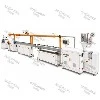
A material feeding system (also known as a central material feeding system) is an industrial automation system primarily used in production scenarios requiring automated storage, conveying, and distribution of powdered or granular materials. Its core application areas include multiple industries such as plastics processing, chemicals, food, pharmaceuticals, and new materials.
In the plastics processing field, the system is designed for the production of plastic products in injection molding workshops, enabling uninterrupted, unmanned, continuous molding operations. Typical applications include injection molding, extrusion processing, blown film and blow molding, and multi-material composite operations. The system can modify the types of raw materials and the combination of multiple colors as needed to automate the coloring process.
In the chemical, food, and new materials industries, the system addresses pain points such as the susceptibility of powder/granular materials to moisture and oxidation, low efficiency of manual handling, and poor batch stability. Through fully sealed storage tanks, inert gas protection, and vacuum conveying technology, it achieves efficient and clean storage and precise conveying of materials, ensuring raw material activity and process consistency.
In the pharmaceutical industry, the system can be applied to GMP standard cleanrooms (such as Class 100,000 cleanrooms) to achieve closed-loop pipeline transportation of raw materials, completely avoiding noise, dust, and heat pollution to the workshop and meeting the requirements for high cleanliness production.