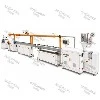
Feeding is generally done using granular materials, but strip or powder materials can also be used. The feeding equipment typically uses a conical hopper, with a volume required to provide at least one hour's output. The hopper has a cut-off device at the bottom to adjust and cut off the material flow, and a viewing window and calibration device are installed on the side. Some hoppers may also have pressure-reducing devices or heating devices to prevent the raw material from absorbing moisture from the air, or some hoppers may have built-in agitators for automatic feeding or adding.
1. Hopper Hoppers are generally designed symmetrically. A viewing window is provided on the side of the hopper to observe the material level and feeding status. The bottom of the hopper has an opening and closing door to stop and adjust the feeding rate. A cover is placed on top of the hopper to prevent dust, moisture, and impurities from falling in. When selecting hopper materials, lightweight, corrosion-resistant, and easy-to-process materials are preferred, with aluminum and stainless steel plates being common choices. The hopper volume depends on the size of the extruder and the feeding method, generally corresponding to the extrusion capacity of 1 to 1.5 hours.
2. Feeding There are two feeding methods: manual feeding and automatic feeding. Automatic feeding mainly includes spring feeding, blower feeding, vacuum feeding, and conveyor belt feeding. Generally, small extruders use manual feeding, while large extruders use automatic feeding.