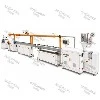
Ensuring the Precision of the Feeding System
Guaranteeing the metering and feeding accuracy of the feeding system is crucial for maintaining consistent product formulations and minimizing raw material waste. Achieving high-precision feed control generally requires a systematic approach across the following four dimensions:
As the "heart" of the feeding system, the load cell's performance directly determines the upper limit of accuracy. High-resolution sensors with strong interference immunity must be selected, and they must be installed to ensure uniform load distribution without off-center loading. Additionally, signal lines require proper shielding and independent grounding to prevent electromagnetic interference from factory motors or variable frequency drives (VFDs)-which could cause false fluctuations in weight readings-thereby establishing a reliable data foundation for precise feeding.
The soundness of the mechanical design directly impacts the system's dynamic accuracy. Hoppers should feature smooth inner walls and a circular or wide-angle conical shape to prevent material residue from causing error carryover between batches. Furthermore, flexible connections must be used between the feeding system and upstream/downstream equipment; rigid contact is strictly prohibited. This not only isolates the weighing unit from vibrations generated by the main machine but also prevents "force coupling"-where accumulated powder hardens the connection over time-which could otherwise lead to significant weighing inaccuracies.
Advanced control software is key to enhancing the feeding system's dynamic accuracy. By employing adaptive PID control algorithms, the system can automatically adjust parameters in real-time based on actual flow rate deviations. To address impact errors common during the refill phase, the system can automatically switch to volumetric mode with integral compensation, then rapidly revert to loss-in-weight mode once refilling is complete. Additionally, a built-in automatic zero-calibration function eliminates sensor zero-point drift in real-time, ensuring metering accuracy during prolonged operation.
Long-term accuracy stability relies on a rigorous closed-loop maintenance process. Operators must perform zero-point calibration before startup each day and conduct periodic linearity calibration using standard weights. Routine maintenance should include the timely removal of accumulated dust from hoppers, screws, and sensor surfaces, as well as inspections to ensure seals and bearings remain in good condition. Regular cleaning and standardized operations help prevent a gradual decline in the feeding system's accuracy caused by factors such as material bridging, component wear, or weight accumulation from dust.
Please feel free to contact us for in-depth information regarding feeding systems; our team is ready to provide professional answers at any time. With our command of cutting-edge industry technology and a highly efficient customer service team, we look forward to engaging in meaningful dialogue and achieving mutually beneficial growth.