Commissioning Steps for the Extrusion Machine
Commissioning is a critical phase in transitioning the extrusion machine from startup to stable production; a systematic commissioning process significantly enhances product quality and reduces the scrap rate. Standardized commissioning typically involves the following four key steps:
1. Comprehensive Pre-startup Preparation and Preheating
Before pressing the start button, a thorough inspection of the equipment is mandatory. Verify that auxiliary systems-such as power supply, cooling water, and compressed air-are functioning correctly. Clear the hopper and feed inlet of debris, strictly preventing hard foreign objects (like metal) from entering the barrel. Subsequently, set the heating zones of the barrel and die head to their target temperatures and initiate a slow heating process. Once the set temperatures are reached, maintain them for a period to ensure uniform heating across the barrel and screw, thereby laying the foundation for stable material plasticization.
2. Low-Speed Screw Startup and Speed Adjustment
When starting the extrusion machine, the screw speed must initially be set to the minimum level and then gradually increased. This prevents equipment damage caused by instantaneous overload. During the speed ramp-up, closely monitor material plasticization to ensure the melt is homogeneous and free of unmelted particles. Simultaneously, keep a close watch on the main motor current and back pressure, stabilizing the screw speed within the optimal range for the specific material properties to avoid overheating and thermal degradation caused by excessive speed.
3. Fine-Tuning Die Head Pressure and Die Gap
Die head pressure and gap settings directly determine the product's appearance and dimensional accuracy. During commissioning, closely monitor melt pressure and balance the discharge rate by fine-tuning the die adjustment bolts. Precisely calibrate the product wall thickness by narrowing the gap at thicker sections and widening it at thinner sections. Additionally, adjust the temperatures of various die head zones to modify melt viscosity, ensuring uniform thickness around the circumference of the extrudate.
4. Haul-off Speed Matching and Integrated Trial Run
Once the material is successfully extruded from the die head, it must be immediately fed into the cooling and sizing unit and connected to the haul-off machine. The haul-off speed must be strictly matched to the extruder's output rate to maintain a constant draw ratio. During the integrated trial run phase, it is essential to continuously monitor the operating status of the entire production line and observe the product's dimensional stability and surface quality. Final fine-tuning of parameters-such as temperature, rotational speed, and haul-off speed-is required until the extrusion process is fully stabilized and the product meets quality standards.
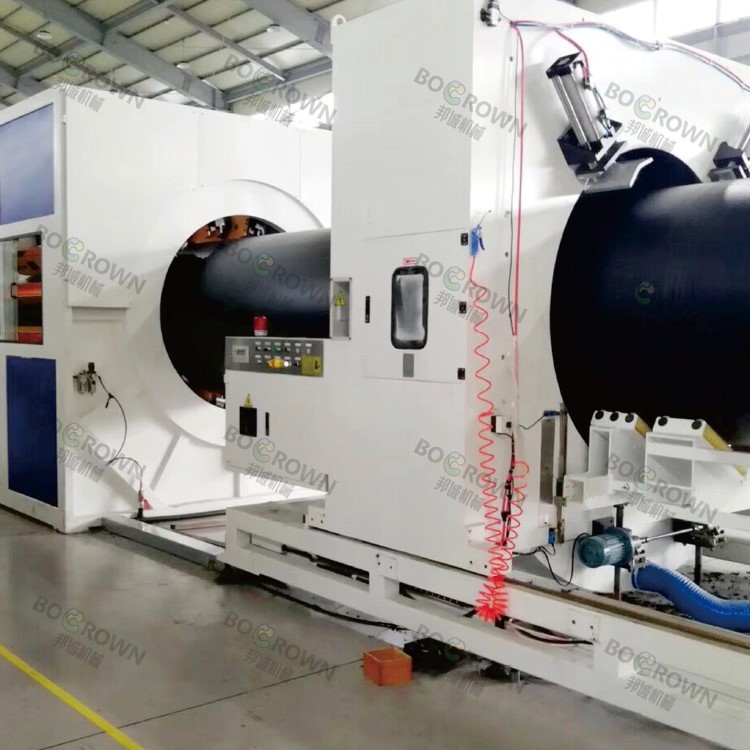
If you would like to learn more about the commissioning procedures for extrusion machines or related topics, please feel free to contact us at any time. Backed by extensive industry experience and a professional engineering team, we look forward to exploring opportunities for mutual growth with you.