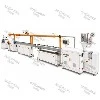
Selecting an extrusion machine is a systematic decision-making process that directly impacts production line efficiency, product quality, and the company's operating costs. To choose the most suitable equipment, it is recommended to consider the following four core dimensions:
The primary prerequisite for equipment selection is a thorough analysis of the raw material's physical and chemical properties. Different plastics vary significantly in terms of melt index, viscosity, and thermal stability. For instance, processing highly heat-sensitive PVC requires a screw configuration that exerts low shear force and ensures gentle plasticization; conversely, processing high-viscosity engineering plastics or highly filled materials demands a machine capable of delivering higher specific torque and superior shear-plasticizing performance. Only by ensuring a perfect match between the extrusion machine's core structure and the raw material's characteristics can the uniformity of material plasticization be guaranteed at the source.
An enterprise's production scale and efficiency targets are key factors in determining equipment specifications. Screw diameter and the length-to-diameter (L/D) ratio should be selected based on projected output. Generally, a larger screw diameter yields higher hourly extrusion output, while a higher L/D ratio allows for a longer residence time within the barrel, resulting in more thorough plasticization. If the production plan requires continuous 24-hour operation, particular attention must be paid to the equipment's overall heat dissipation system, motor stability, and the wear resistance of core components.
Hardware specifications determine the equipment's precision and durability. A high-quality extrusion machine should feature high-precision zoned temperature control and servo drive systems to ensure uniform temperatures and stable screw speeds during the extrusion process. Additionally, prioritizing models equipped with intelligent PLC control systems is recommended; these systems not only enable real-time production data monitoring but also significantly simplify manual operation. For the production of new materials with significant formulation variability, screw configurations offering customization capabilities often provide better long-term cost-effectiveness than standard, general-purpose machines.
Operational energy consumption and maintenance costs are critical factors throughout the equipment's lifecycle. When selecting equipment, one should look beyond theoretical specifications and consider actual energy consumption data under similar operating conditions; opting for energy-efficient designs can significantly reduce electricity consumption per ton of material processed. Furthermore, a robust service network and responsive after-sales support are essential. For small and medium-sized processing enterprises, choosing a high-quality domestic brand that offers tailored process solutions and reasonable maintenance costs is often more pragmatic than blindly pursuing expensive imported equipment.
If you would like to learn more about extrusion machinery, please contact ZJG BC Machinery; our team of experts is ready to provide detailed information and personalized service.