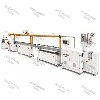
Installation Steps for the Feeding System
As the core upstream component of the extrusion production line, the installation quality of the feeding system directly impacts the stability of subsequent production and the purity of the raw materials. A standard installation process for the feeding system typically involves the following four key steps:
1. Site Planning and Foundation Preparation
Before actual installation, the relative positions of the feeding system, the main extruder unit, the dryer, and the raw material storage area must be planned according to the workshop layout. Ensure sufficient operating space and maintenance access are reserved around the equipment, and verify the flatness and load-bearing capacity of the installation floor. Additionally, confirm the locations of the power supply, compressed air connections, and cooling water pipelines in advance to ensure smooth utility hookups and lay the groundwork for precise equipment positioning.
2. Precise Positioning and Anchoring of Main Equipment
Lift the main equipment-such as vacuum loaders, gravimetric feeders, or storage hoppers-into their designated positions. Use a level gauge during installation to ensure the equipment is perfectly horizontal, preventing uneven material discharge or abnormal vibration caused by tilting. Once positioned, securely anchor the equipment to the floor using anchor bolts; if necessary, install vibration-damping pads at the base to isolate operational vibrations and ensure the stability of the main extruder.

3. Pipeline Connection and Sealing
Pipeline connection is a critical aspect of the feeding system installation. Following the process flow, securely connect the suction pipes, flexible hoses, and rigid piping between the loader and the extruder hopper. Minimize the number of elbows and shorten the conveying distance to reduce resistance during material transport. Reinforce all pipe joints with specialized clamps or sealing tape to ensure the entire conveying system is tightly sealed, strictly preventing the ingress of outside air or the leakage of raw material dust.
4. Electrical Wiring and Integrated Commissioning
After completing the mechanical and piping installation, a qualified electrician must perform wiring according to the electrical schematic, ensuring signal communication between the feeding system's control cabinet, sensors, and the main extruder. Once wiring is complete, conduct a no-load "jog" test to verify correct motor rotation and responsive operation of the suction valves. Finally, an integrated trial run with material is conducted; the feeding speed and vacuum loading timing are precisely adjusted based on the extruder's actual production capacity requirements to ensure a continuous, uniform supply without interruptions.
We are a professional manufacturer of feeding systems, holding multiple patented technologies. We offer customized solutions and comprehensive after-sales service, and we sincerely invite you to collaborate for mutual success and to join us in pioneering a new era!